GTM Playbook · 10 min read
How To Turn Real-Time Buying Signals Into 18+ Demos Per Week
The complete AI GTM playbook from 11 years and 628,000 cold emails and LinkedIn DMs.
A Short Note Before You Read
I'm Shabbir, co-founder of Coolie and a 2x founder with 11 years in sales. I've sent, received, and analysed over 628,000 cold emails and LinkedIn DMs — enough to know that the way most teams still do outbound stopped working around 2024.

Outbound itself is alive. 75% of my qualified meetings this quarter came from email and LinkedIn — using the exact system in this playbook. What's dead is the spray-and-pray version of it: cold lists, templated personalisation, and "Congrats on the funding!" openers.
What replaced it is what I'm going to show you. Read it end to end and you'll have the same system my team uses to book 18+ qualified conversations a week.
→ If you'd rather skip ahead and try the tool that automates it: trycoolie.ai (7-day free trial)
A quick video that shows everything in less than 2 minutes.
What You're Going to Learn
A three-part system: Find → Research → Sequence.
- Find — How to spot the moment a prospect becomes warm, not just whether they fit your ICP.
- Research — How to translate a public signal into the specific business tension keeping your buyer awake. This is the part nobody teaches.
- Sequence — How to deliver that insight across email, LinkedIn, WhatsApp and the phone so it lands like one conversation, not four campaigns.
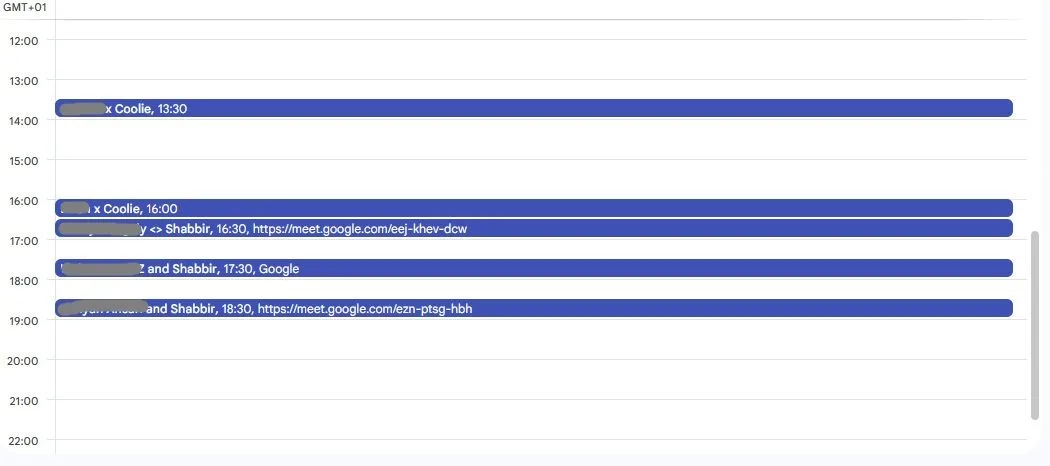
The numbers we hit running this system:
- ~45% reply rate on LinkedIn (57% connection acceptance)
- ~14% reply rate on email
- ~25 prospects worked per booked meeting (vs. ~200 on traditional cold outbound)
- 3–5 demos booked per day
Why Cold Outbound Stopped Working
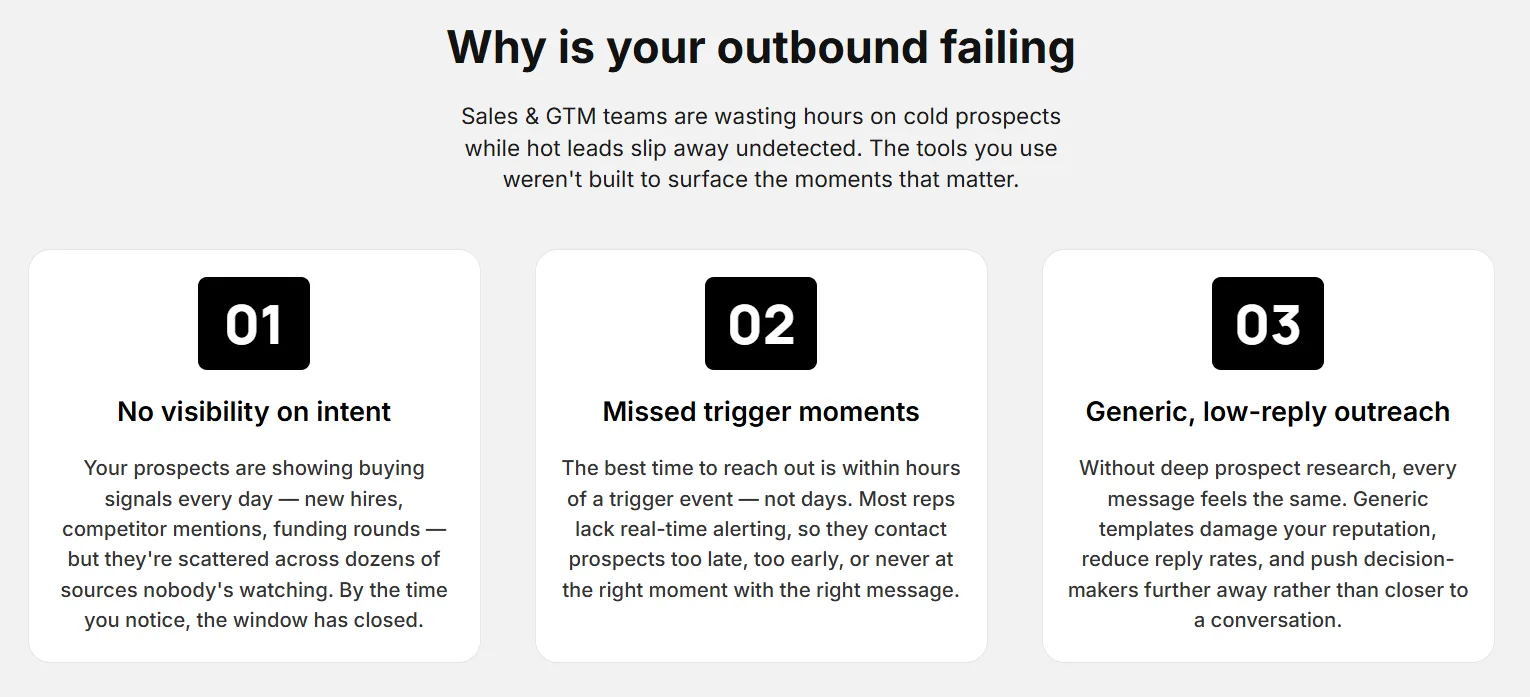
The cold outbound playbook from 2018 still gets taught in 2026. That's why most teams are stuck at 1% reply rates.
| The Old Cold Outbound | Intent-Led Outbound |
|---|---|
| ~1% reply rate | 14–47% reply rate |
| ~200 prospects per booked meeting | ~25 prospects per booked meeting |
| Targets anyone in the ICP | Targets people showing real-time buying behaviour |
{firstName} personalisation | Insight-led tension that mirrors their internal conversation |
| Templates with names swapped in | Sequences built from real research |
| Fighting for attention in a crowded inbox | Joining a conversation they're already having |
The real shift isn't volume or tooling. It's what you do with a signal once you see it.
When someone comments on a competitor's post, they're raising their hand. When you reference the specific tension that competitor mention creates for their role — not just the fact that they commented — you stop sounding like a vendor. You sound like a peer who did their homework.
That single move — from personalisation to tension — is what takes a reply rate from 1% to double digits.
PART 1 - Find: Catch People at the Moment They Become Buyers
What a High-Intent Lead Actually Is
A high-intent lead is your ICP fit plus a real-time behaviour that tells you they're in-market today.
Most sellers build cold lists based on firmographics like industry, headcount, title. That tells you who might buy in the next 6 months.
Intent signals tell you who is open to a conversation this week. That's where the reply-rate gap lives.
| Just a Data Point | A High-Intent Signal |
|---|---|
| "Works at a 200-person SaaS company" | Just commented on a competitor's post about outbound |
| "VP of Sales title" | Just hired 3 SDRs in the last 30 days |
| "Raised Series B last year" | Just announced expansion into a new market this week |
| "Uses Salesforce" | Just posted asking for help with pipeline quality |
The Signals That Drive Replies
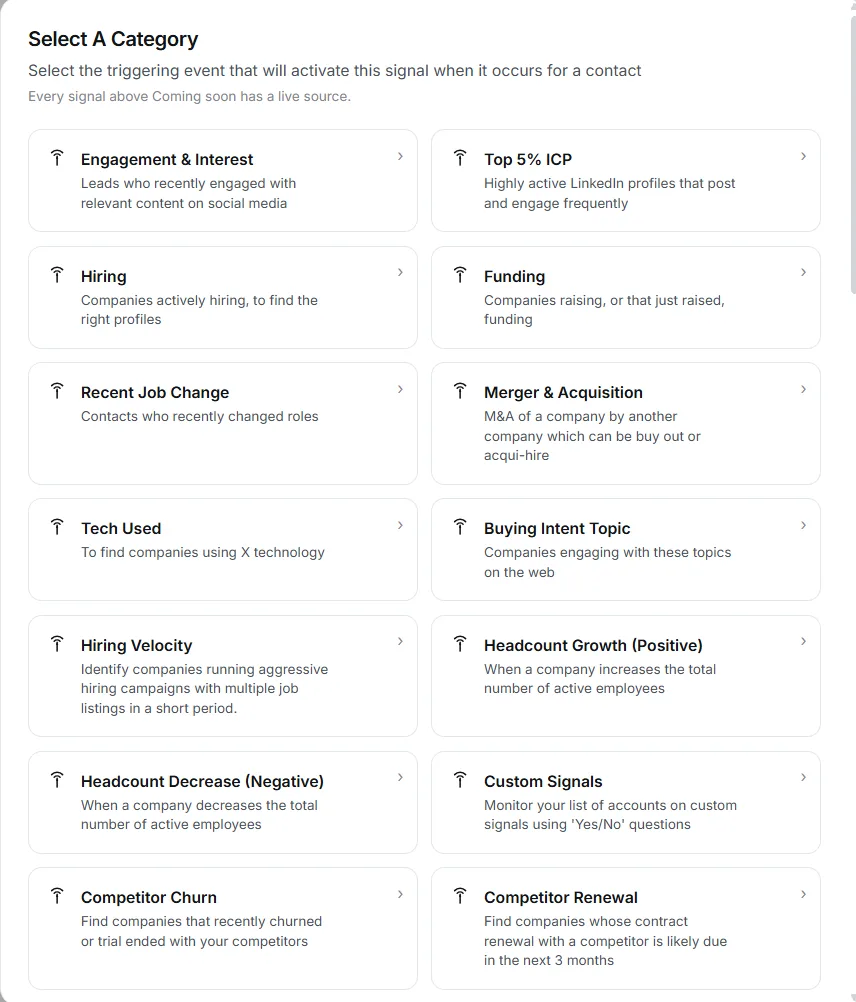
These are the events worth building your prospecting around:
- Using your competitor technology
- Recently Churned or Trial Ended from your competitor
- Competitor contract renewal in the next 90 days
- Liking or commenting on a competitor's post
- Engaging with content from an influencer in your niche
- Starting a new role or job promotion (especially VP or C-level)
- Making key hires into a function in 30 days
- Announcing fresh funding
- Publicly asking for tool recommendations or sharing a pain point
- Hiring relevant roles or job posts
Each one is a public moment where someone's situation changed. Reach out within the first 48 hours and you're not interrupting — you're well-timed.
How to Capture Signals (Two Options)
Option 1: Manually. Doable. Set up LinkedIn Sales Navigator filters, follow competitor pages, monitor news. Expect ~3 hours per day per rep to do this well.
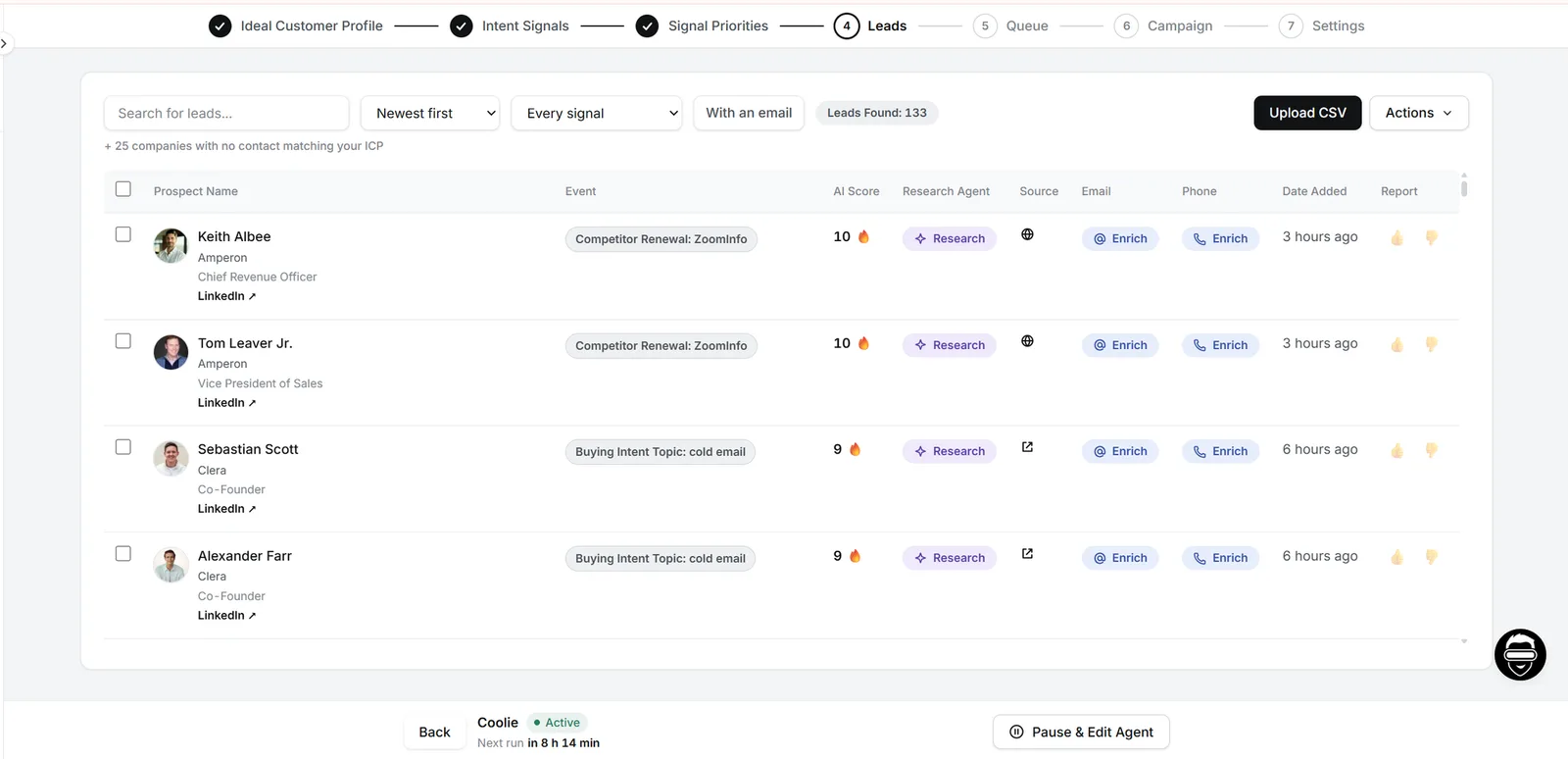
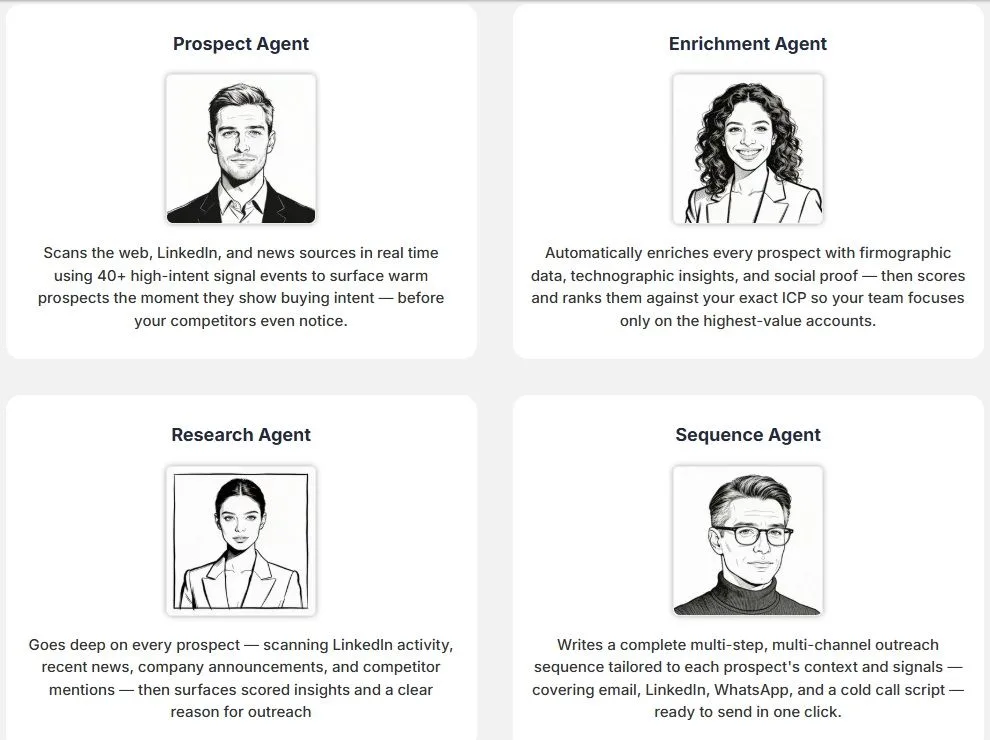
Option 2: Let agents do it. This is what Coolie's Prospect Agent is built for — it monitors LinkedIn, news, job boards and financial filings 24/7 across 40+ signal events and surfaces matched prospects every morning. Whichever route you take, the rest of this playbook applies the same way.
PART 2 - Research: Stop Personalising. Start Referencing Tension.
You've got high-intent leads. Now the harder question: What do you actually say?
Most reps stop at "Congrats on the funding!" That's why most reps live at ~1% replies.
The funding round isn't the message. The pressure that funding round creates for your specific buyer — that's the message.
I call this 3rd-Level Research. Here's the full framework, then a real example.
The 3 Levels of Insight
Level 1 — The Observable Event
What happened.
Something public. A funding round. A leadership hire. A product launch. A new market push. Every seller sees it. Every seller sends the same congratulatory line. Nobody responds, because there's no thinking in the message.
Level 2 — The Strategic Intent
What they're doing with it.
Where is the money going? What does the hire signal about direction? You now have context. You've shown you can read a press release. But your prospect already knows all this — you haven't earned a reply yet.
Level 3 — The Tension It Creates
What's keeping them up at night right now.
The strategic move creates predictable internal friction for this role at this company. This is the conversation they're already having internally — with their boss, their team, themselves. Walk straight into that conversation and you're no longer pitching. You're contributing.
🧠 Full Signal Library → Click Here To Read 🧠
A Real Example: Hireflow Raises $12M
Level 1 — What everyone sees:
Hireflow raised $12M and is moving from SMB into Fortune 1000 enterprise.
Most reps send: "Congrats on the round! Would love to chat." → ignored.
Level 2 — Where the money is going:
Enterprise sales build-out, Fortune 1000 targeting, global HR buyers.
"Saw you're going upmarket — let's chat." → still ignored. They already know this.
Level 3 — The actual tension this creates for their VP of Sales:
- The SDR team was built for 30-day SMB cycles — enterprise runs 3–6 months
- HR, IT, Legal and Procurement are now in every deal — a motion they've never run
- Enterprise buyers are already embedded in Workday or SuccessFactors — switching cost is high
- Status quo bias is the real competitor, not another vendor
- The messaging that closed SMB will actively damage upmarket conversion
- The VP inherited a team and a playbook that weren't built for where the company is going
The message that actually books a meeting:
"Hi John, read the Forbes article on your enterprise push. As you move into Fortune 1000, are you seeing more resistance from buyers already locked into Workday or SuccessFactors than from competing point solutions? It's becoming the harder unlock for the teams we work with."
You're not referencing the funding. You're referencing the friction. That's the difference between a pitch and a peer-level conversation.
Doing 3rd-Level Research at Scale
Done manually, 3rd-level research is brutal — 15 to 20 minutes per prospect to pull insights, score them, and find the one that matters most for their persona. At 30 prospects a day that's an entire SDR's workday gone before they've sent a single message.
This is the gap Coolie's Research Agent is built to close. For every prospect it pulls 300+ contextual data points (product launches, hires, integrations, strategic moves, press) and scores each one against your value prop. You see the top 3–5 ranked, each with a "why this matters right now" explanation for the specific persona.
You get the 3rd-level insight in seconds instead of 20 minutes. The framework is the same either way — Coolie just makes it fast enough to run at GTM volume.
→ Want to try this on your own ICP?
Start a free Coolie account — the first 3 prospects you add show you the full insight stack before you commit to anything.
PART 3 — Sequence: One Insight, Four Channels, Seven Days
Here's where most teams still lose. They find a signal. They write one decent personalised email. And when it doesn't reply, they default back to a generic template for the follow-ups — undoing the work that earned the first reply in the first place.
One insight is enough for an entire 7-day, 4-channel sequence — if you sequence it right.
The Multi-Channel Logic
Your VP of Sales prospect is not sitting in their inbox waiting for you. They're on LinkedIn at 8am, in meetings 10–12, on email mid-afternoon, on WhatsApp with vendors around 2pm, and answering their phone between 4 and 6.
A sequence built around a single 3rd-level insight — touched across the channels they actually use — compounds awareness without feeling spammy, because every touchpoint says the same thing in the same voice. You're not running four campaigns. You're having one conversation across four surfaces.
The 7-Day Cadence That Works
A simple, repeatable shape we've tested across thousands of prospects:
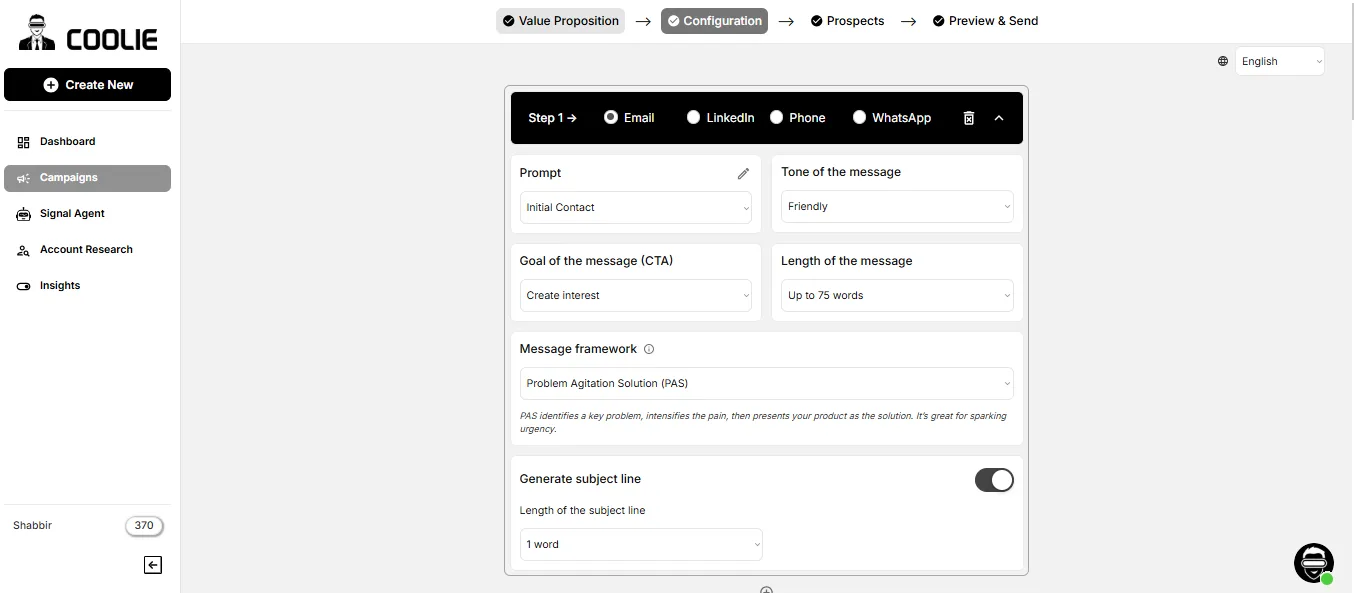
- Day 1, AM — LinkedIn connection request, no message. Just the request.
- Day 1, PM — Email #1: the insight + the question. Short. ~60 words. No pitch.
- Day 2 — LinkedIn message (if they accepted): conversational, references the same tension.
- Day 4 — Email #2: a new angle on the same tension. Not a "bumping this" follow-up.
- Day 5 — WhatsApp (if number verified): one line, very casual. "Hey — sent you a note on the Fortune 1000 buyer angle. Curious if it's on your radar."
- Day 7 — Cold call. Opener references the prior touches and the same insight. Objection handlers tied to the same tension.
The key isn't the channels. It's the anchor. Every message references the same 3rd-level tension. Different angle, same conversation. That's what makes it feel like a peer reaching out four times — not four campaigns hitting one inbox.
What This Looks Like at GTM Scale
Hand-writing this sequence for one prospect takes ~20 minutes. For 30 prospects a day, it's not happening.
This is what Coolie's Sequence Agent automates: it takes the top-ranked insight from the Research Agent, your value prop, and the prospect's full context, and writes the entire 7-day multi-channel sequence — email, LinkedIn, WhatsApp and a cold-call script — all anchored to the same tension. You edit and send.
Same framework, 30–50 personalised sequences per day instead of 10.
Your First 4 Weeks
A realistic ramp. No "9 calls in 2 days" promises — that comes later, after the system has data to learn from.
Week 1 — Foundation
Set up your ICP, activate 3–5 signal agents (competitor engagement, job changes and funding alerts are the easiest wins), and start working the first batch of warm leads.
→ Expect: 50–100 high-intent leads surfaced, 10–15 conversations started, 2–3 booked meetings.
Week 2 — Tighten
Review which signals are producing the highest-quality conversations. Cut the weak ones. Adjust your ICP filters. Start running full multi-channel sequences instead of single-channel.
→ Expect: 100–150 leads, 25–30 conversations, 5–8 booked meetings.
Week 3 — Scale
Activate more agents (Top 5% ICP, content engagement, company page visits). Push the full 7-day cadence across all four channels.
→ Expect: 300–400 leads, 40–50 conversations, 10–15 booked meetings.
Week 4 and Beyond — Compound
Signals accumulate. Reply data feeds back into which insights work best. Your sequence library gets sharper. This is when you hit 18+ meetings a week consistently.
Two Mindset Shifts That Make the Whole Thing Work
Shift #1 — Stop building cold lists. Start catching real-time signals.
ICP tells you who might buy. Signals tell you who will engage this week. Every post, comment, hire and funding round is a public window. Outbound that walks through open windows feels like timing, not interruption.
Shift #2 — Stop personalising. Start referencing tension.
"Personalisation" in 2026 means demonstrating that you understand the pressure your buyer is already under. Not their first name. Not their funding round. The specific friction that funding round created for their role this week. That's what earns a reply.
Make both shifts and cold outbound stops feeling cold. It feels like good timing.
Get Started
→ Create a free Coolie account: trycoolie.ai (7-day trial)
Most teams have signals running through their pipeline within 10 minutes of signing up. If you want a hand setting it up, message us inside the product — our team replies in under an hour and walks you through your first campaign live.
Built for B2B SaaS founders prospecting solo, GTM and Sales teams running outbound at scale, and sales leaders who want their reps spending time on conversations instead of research tabs.
Happy prospecting. 🚀
— Shabbir, Co-founder, Coolie
Real Results From Teams Running This System ⬇️
1. How Recruiterflow's Sales Team Tripled Reply Rates in One Week
→ Click here to read the full case-study
2. How Datatracks 6x Email Reply Rates and Gave ~208 Hours
→ Click here to read the full case-study